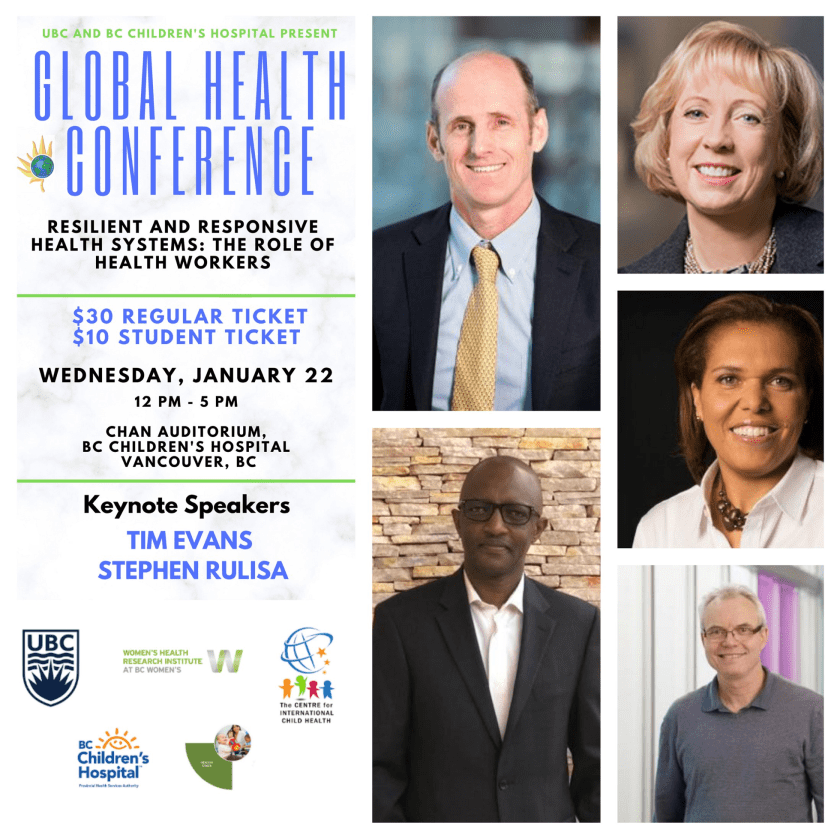
HRH Insights from Experts in Global Health

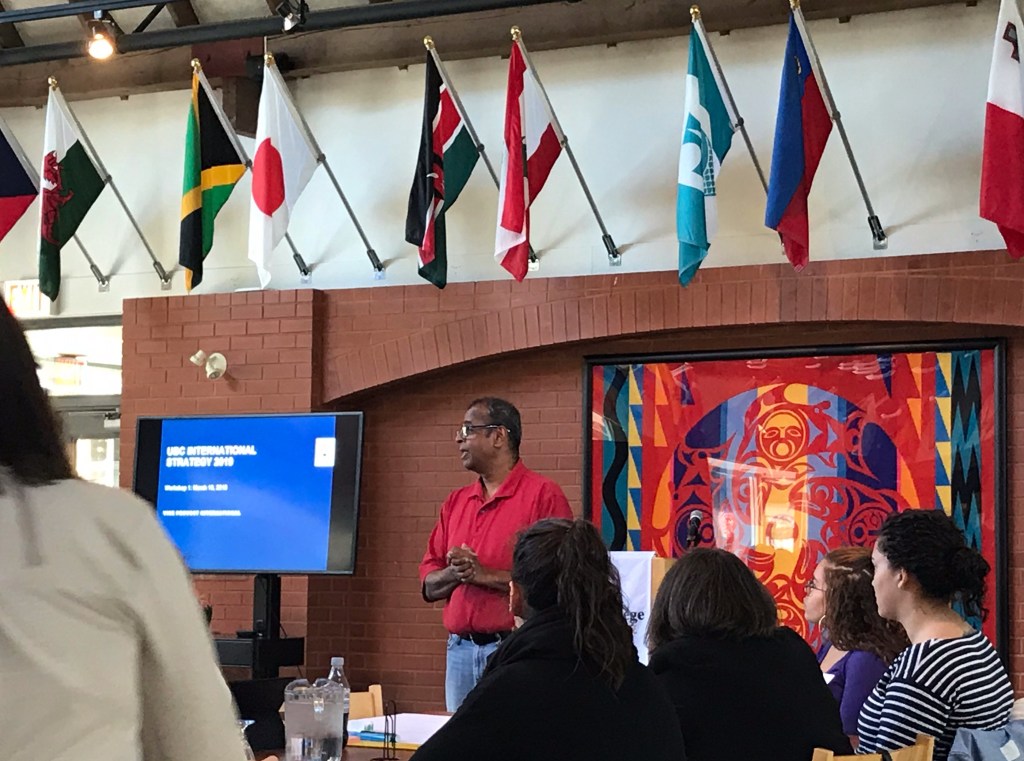
Following the launch of UBC’s new strategic plan: Shaping UBC’s Next Century, the Office of the Vice-Provost, International has recently embarked on a process to develop an International Strategy for UBC. I participated in UBC’s international strategy workshop designed to engage the university community and provide input into the developing framework.
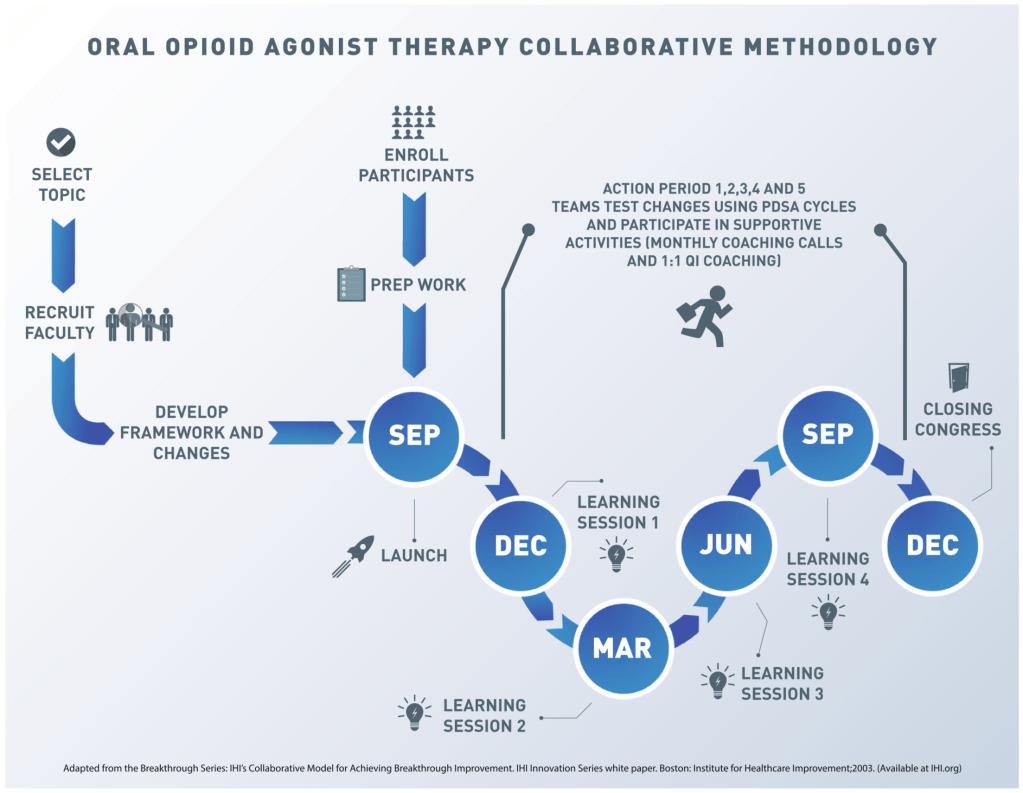
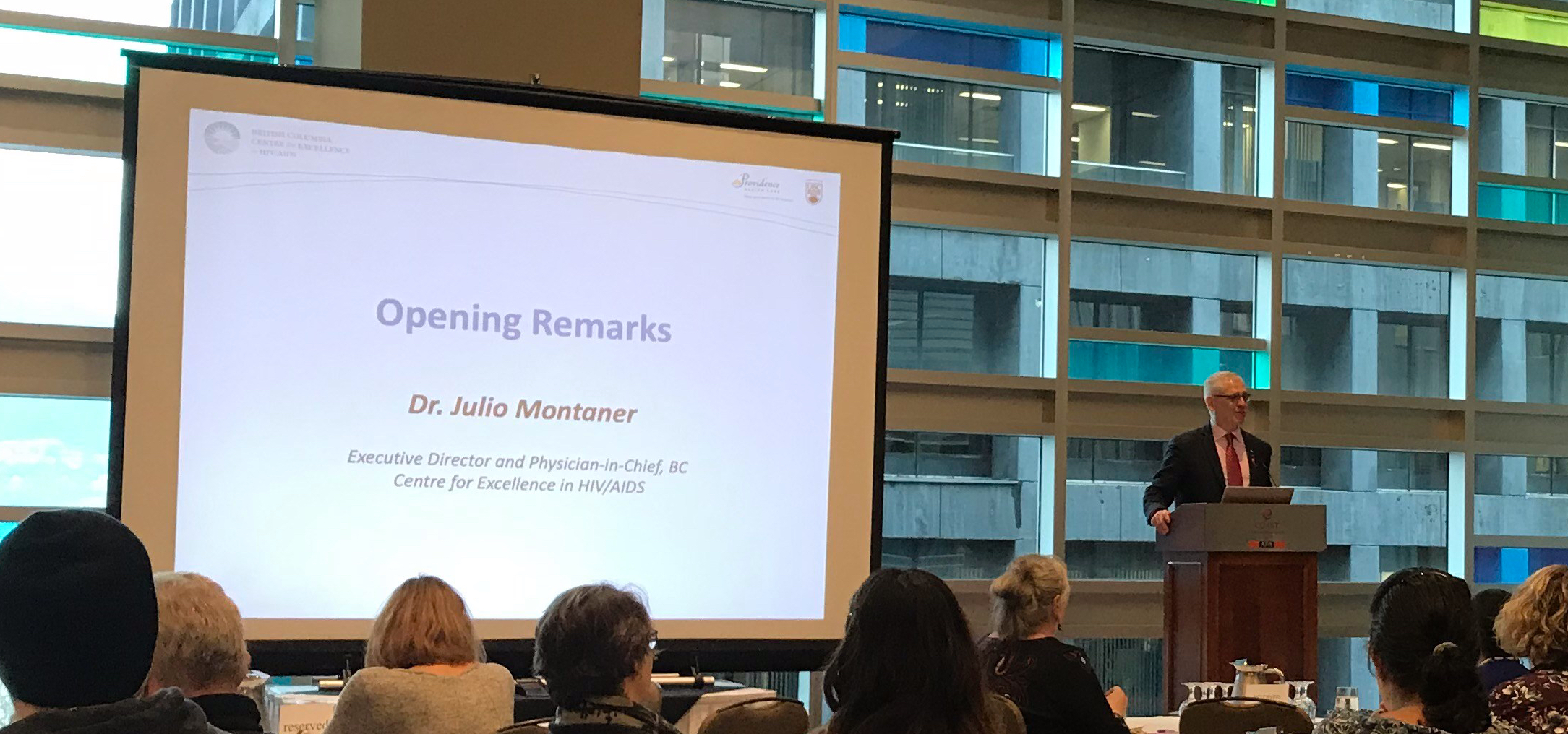
I had the amazing opportunity to participate in the BOOST Collaborative learning sessions, which allowed me to meet so many passionate and dedicated health professionals and community partners. In 2017, the Vancouver BOOST Collaborative was launched in partnership between the BC Centre for Excellence in HIV/AIDS (BC-CfE) and Vancouver Coastal Health (VCH) by systematically implementing, measuring and sharing best-practices in oOAT.

As a result of the success in the Vancouver BOOST Collaborative, The BC Centre for Excellence in HIV/AIDS (BC-CfE), with funding from Health Canada’s Substance Use and Addiction Program, has expanded to establish the Provincial BOOST Collaborative.
 It takes a village…Thanks to my committee and the organizations with, and in, which I conducted my research: Dr Babak Pourbohloul, Dr Hadi Dowlatabadi, Dr Bonnie Henry, BCCDC and UBC.
It was tough to summarize 6 years in 350 characters, but here’s my doctoral citation:
Dr. English studied the interpersonal relationships required for knowledge exchange in a public health context. Specifically, she applied insights from network modelling of contagious phenomena to characterize these exchange pathways. This understanding aims to improve knowledge dissemination and translation in support of healthier populations.
I use network science to show that organizing for process efficiency is not the same as organizing for innovation. It has been suggested that new knowledge is created through two simple processes: combination and exchange. Knowledge exchange shares many properties with other contagion phenomenon and is fundamentally embedded in relationships. Strong collaborations, established through multiple pathways, increases trust, access to new knowledge and the synergies necessary for innovation.
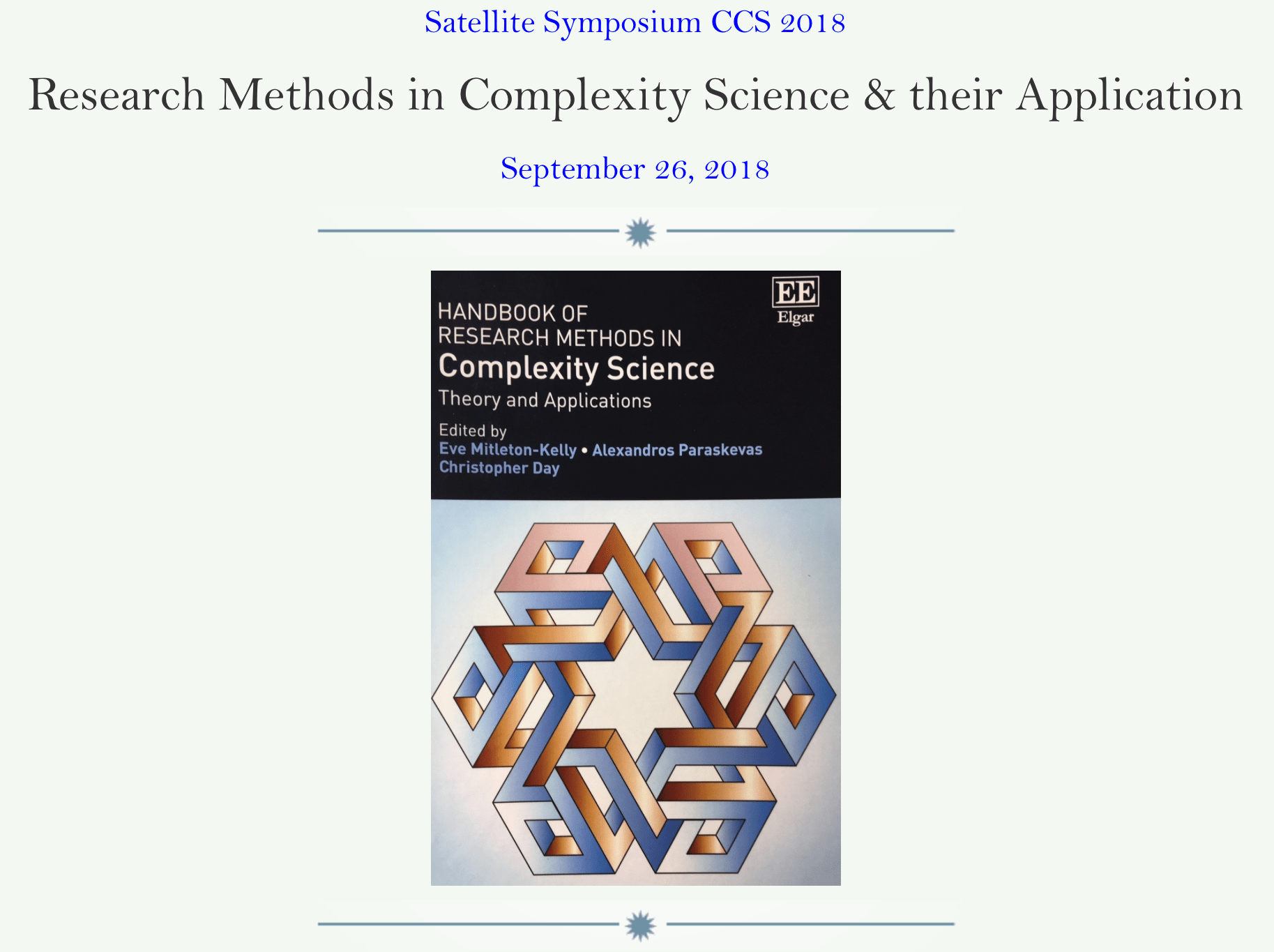
Join our authors presenting on different research methods and their application.
Participate in a Knowledge Café facilitated by Dr. Boaz Tadmor and Dr. Edna Pasher discussing future research directions.
Authors and Subjects of Talks:
Complexity, the Bridging Science of Infectious Disease Outbreak Response: Prof. Babak Pourbouloul, University of British Columbia, Canada.
A Map of the Mind: Nonlinear Dynamics in Neuroscience and Psychiatry: Prof. Yakov Shapiro, University of Alberta, Canada.
Descartes, Gödel and Kuhn: Epiphenomenalism defines a Limit on Reductive Logic: Prof. J. Rowan Scott, University of Alberta, Canada.
Addressing Global Challenges: The EMK Complexity Methodology: Prof. Eve Mitleton-Kelly, London School of Economics, England.
Hospital of the Future,.. Applied EMK Methodology: Prof. Pierre Singer, Rabin Medical Centre, Tel Aviv, Israel
 Understanding the movement and contact patterns of HCWs within hospital settings may allow for more targeted and effective infection control interventions. To address this knowledge gap, we conducted a cross-sectional study of HCW in three major Canadian health care facilities to assess interpersonal contact patterns, movement throughout the facility, and demographic characteristics. These data can be used to develop a model that represents the heterogeneous contact patterns in the hospital setting. Check out the article in BMC Infectious Disease.
So happy to have been a part of this night. Not only did we raise over a million dollars for The Canucks for Kids 50/50 draw, we got to pay tribute to the Sedin’s during their last home opener.

 Krista English MBA PhD